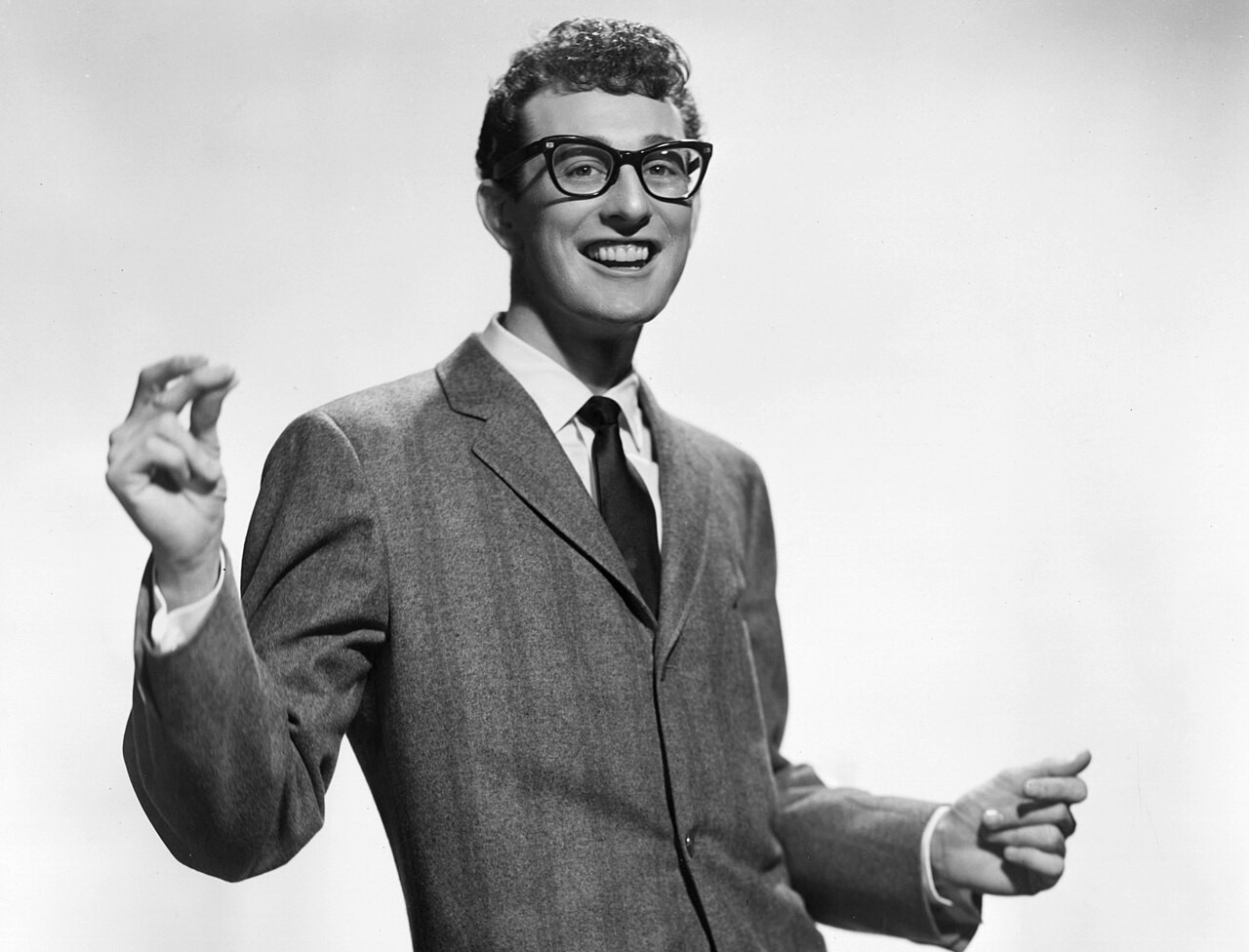
Buddy Holly turns 90 today, if you count from the day he was born instead of the day the music died. Charles Hardin Holley came into the world on September 7, 1936, the youngest of four children of Lawrence and Ella Holley, in a house in Lubbock. His dad worked as a tailor and salesman at a downtown clothing store. His mom thought "Charles Hardin" was too big a name for such a small boy, so she started calling him Buddy. It stuck for the rest of his short, loud life.
A Sixth-Grade King Who Started in Gospel
The Holleys were musical, and gospel came first. Buddy sang before he could really play anything. He took a run at piano lessons at eleven and quit after nine months, tried steel guitar, and finally settled on the acoustic guitar he taught himself. At five, he'd already won five dollars singing "Down the River of Memories" with his brothers at a talent show in the nearby community of County Line. By sixth grade, his classmates voted him class king — a small-town honor that says more about the kid's charm than his guitar chops, which were still years from famous.
Buddy Holly's Path From Buddy and Bob to the Crickets
Holly met Bob Montgomery at Hutchinson Junior High in the fall of 1949, and the two started performing as Buddy and Bob, playing country and western on a Lubbock radio station and opening for touring acts passing through town. Everything shifted in 1955, when the duo opened for Elvis Presley three separate times at the Fair Park Coliseum. Bandmate Sonny Curtis put it plainly afterward: Buddy fell for Elvis, and the band followed him from country into rock and roll.
The real break came that October, when Buddy and Bob opened for Bill Haley and His Comets, also at Fair Park Coliseum. Nashville talent scout Eddie Crandall was in the crowd, liked what he heard, and helped broker a Decca Records contract that landed in February 1956, with veteran producer Owen Bradley behind the board in Nashville. It didn't work. None of the Decca singles charted, and the label dropped Holly a year later. Only after that flop did he turn to producer Norman Petty, who worked out of a studio in Clovis, New Mexico, just over the state line. With a new band called the Crickets, Holly re-recorded "That'll Be the Day" there in 1957. This time it topped the charts in both the United States and the United Kingdom, and Holly followed it fast with "Peggy Sue," "Oh Boy," "Maybe Baby," and "Not Fade Away" — an almost unreasonable run of hits for a recording career that, start to finish, barely cleared eighteen months.
The Plane Crash That Cut It Short
Holly proposed to Maria Elena Santiago on their first date and married her less than two months later, on August 15, 1958. By early 1959 he'd split from the Crickets and joined the Winter Dance Party tour through the frozen upper Midwest, a lineup that also included Ritchie Valens and J.P. "the Big Bopper" Richardson. After a show at the Surf Ballroom in Clear Lake, Iowa, on February 2, tour buses kept breaking down in the cold, so Holly chartered a small plane to the next stop. Richardson, sick with the flu, talked bandmate Waylon Jennings into giving up his seat. Valens won his seat in a coin flip. The plane went down in a snowstorm shortly after takeoff, killing everyone aboard. Holly was 22.
Here's the detail that gets lost in the legend: his widow miscarried not long after the funeral, which was held at Tabernacle Baptist Church before Holly was laid to rest at City of Lubbock Cemetery (4.3⭐). His headstone spells his name the old way, Holley, and carries a small carving of his guitar. Don McLean would later immortalize the crash date as "the day the music died" in the 1971 hit "American Pie," a phrase now more famous than the man who inspired it.
Lubbock Waited Two Decades to Build Him a Statue
What gets me about this story isn't the crash. It's the gap. Twenty-one years passed between Holly's death and the day his hometown put him in bronze. According to the Texas State Historical Association , Lubbock was slow to recognize what it had, and it took the 1978 film "The Buddy Holly Story" to make the tourism math obvious. In 1979, Jennings and the surviving Crickets played a benefit concert to fund a memorial. Sculptor Grant Speed's eight-and-a-half-foot bronze went up in 1980 in what's now Buddy and Maria Elena Holly Plaza (4.9⭐), on the corner of 19th Street and Crickets Avenue, ringed by the West Texas Walk of Fame .
The Buddy Holly Center (4.6⭐) didn't open until September 3, 1999, forty years after the crash, tucked inside the old 1928 Fort Worth and Denver South Plains Railway depot at 1801 Crickets Avenue. It took until January 2021 for the city to open the Buddy Holly Hall of Performing Arts and Sciences (4.7⭐), a $158 million venue that finally put his name on something built for the living, not just the memory of him.
Ninety years on, the songs still sound like they were written yesterday afternoon, which might be the strangest part of all — a career this short shouldn't have left this much behind.
Have you made the drive out to the Walk of Fame, or does the music do the job on its own?
No comments yet