On the night of August 4, 1838, a handful of Nacogdoches men rode into the Angelina River bottoms hunting stolen horses. Instead of horse thieves, they found gunfire. What they'd stumbled into was the opening move of the Córdova Rebellion, a plot to pull East Texas back under Mexican control. Land grievances, a secret alliance with the Cherokees, and Mexican government agents working the frontier all fed into it.
The Córdova Rebellion Begins with a Stolen-Horse Hunt
The shots that night sent the search party straight back to town with a warning. By August 7, Thomas J. Rusk had confirmation that more than 100 armed men under Vicente Córdova were camped on the Angelina, and he called up the Nacogdoches squadron while sending riders to nearby settlements for reinforcements, according to the Texas State Historical Association .
Vicente Córdova, the Man Behind the Plot
Córdova wasn't some fringe malcontent. He'd served Nacogdoches as alcalde, judge, and regidor, and he'd fought on the side of local citizens during the 1832 battle of Nacogdoches. He'd backed the earlier push against Santa Anna's centralist government, so long as it meant restoring Mexico's Constitution of 1824, but he drew the line at outright Texas independence. Once independence came anyway, Córdova and plenty of fellow Tejanos watched Anglo settlers pour into East Texas and start contesting land titles Hispanic families had held for generations. That grievance festered for two years while Córdova quietly corresponded with agents of the Mexican government.
He also worked the Cherokees. Texas had promised Chief Bowl's people clear title to their East Texas lands in exchange for staying neutral during the revolution, a deal the new republic's government never ratified and formally voided in 1837. Córdova used that broken promise to make his own pitch: join him, and get the land the republic wouldn't give.
Nacogdoches Answers the Alarm
On August 8, President Sam Houston, still a few months from handing the office to Mirabeau Lamar, tried to defuse things from Nacogdoches itself. He issued a proclamation banning unlawful assembly and ordered everyone home in peace. Córdova wasn't interested. Two days later he and eighteen other men signed a counter-proclamation declaring they could no longer bear the "injuries and usurpations" of their rights. That same day Rusk learned local Indians had joined the rebels, swelling their ranks to roughly 400.
Here's what I find genuinely strange about this moment: Houston and Rusk were fighting the same rebellion while actively working against each other. Houston trusted Chief Bowl and wanted peace with him almost at any cost. Rusk didn't buy it. He ignored Houston's direct order not to cross the Angelina River and marched his volunteers straight toward Bowl's village anyway, routing his reports around the president and straight to Vice President Lamar, who saw things his way.
Defeat Near Seguin, and a Presidential Pardon
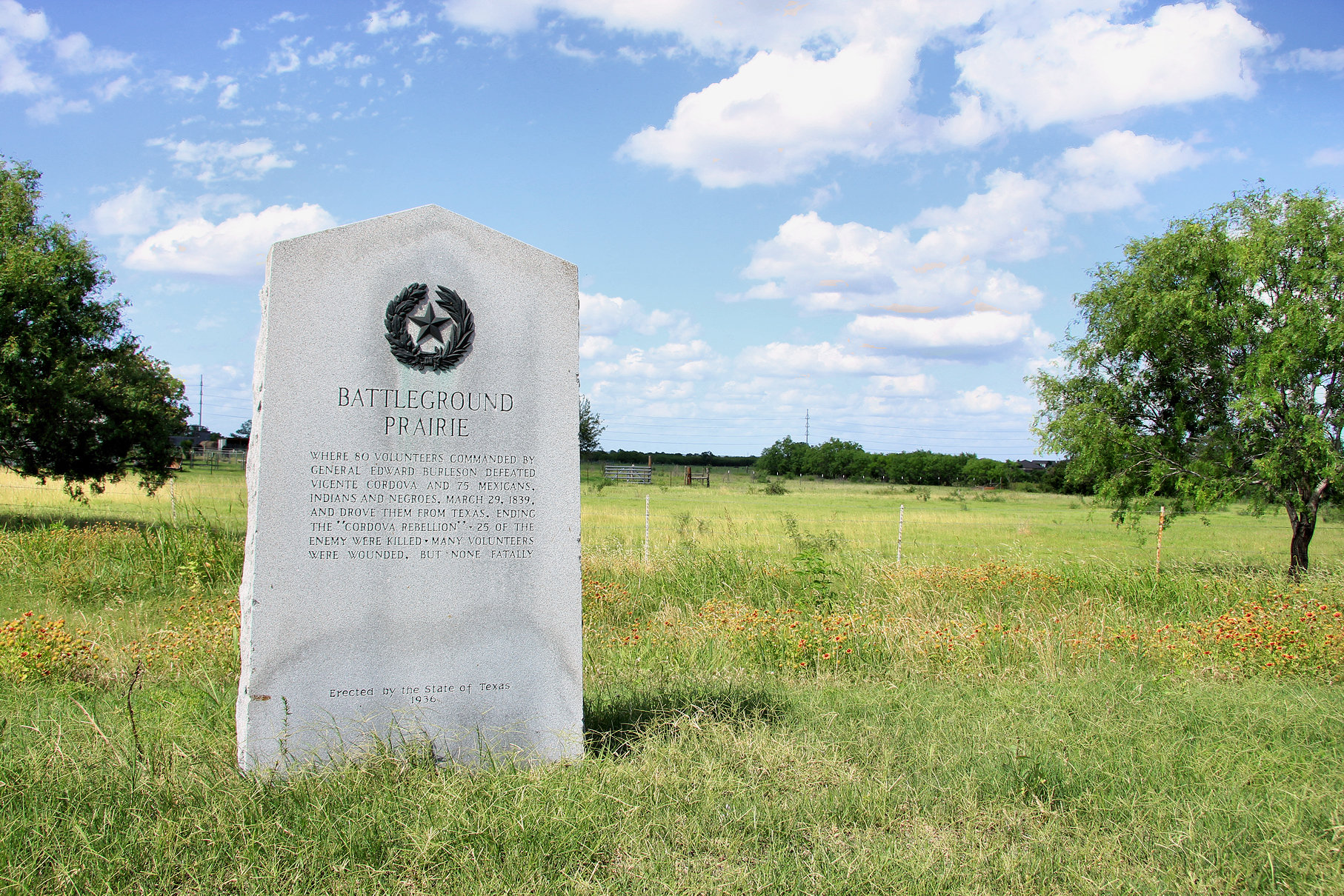
Rusk pushed his volunteers into Cherokee territory, but there was no pitched battle — Córdova’s initial force simply dispersed without a fight. The armed clash near Seguin came separately, months later: on March 29, 1839, at what became known as the Battle of Battleground Prairie, Edward Burleson — not Rusk — intercepted the remaining rebels. Córdova and the other leaders scattered into hiding; Córdova himself made it to Mexico.
The Conspiracy Runs Deeper, and the Cherokees Pay for It
The rebellion's collapse didn't end the story. On August 20, a Mexican officer named Julián Pedro Miracle was killed near the Red River, and papers found on his body confirmed an organized Mexican government project to arm East Texas tribes against the republic, including direct contact with Chief Bowl. Nine months later, in May 1839, Texas Rangers killed another Mexican agent, Manuel Flores, and found more letters addressed to both Córdova and Bowl. That evidence is what finally convinced Lamar the Cherokees couldn't stay in Texas at all, whatever Houston believed about their innocence. The Cherokee War and the tribe's forced removal followed within weeks.
Córdova didn't stay gone for good, either. He came back into Texas in 1842 riding with General Adrián Woll's invasion force and was killed on September 18 of that year at the Battle of Salado Creek, near San Antonio.
A stolen-horse hunt in the Angelina bottoms had turned into a four-year fuse. Makes you wonder how many other "minor incidents" in early Texas history were actually the first sign of something much bigger.
No comments yet