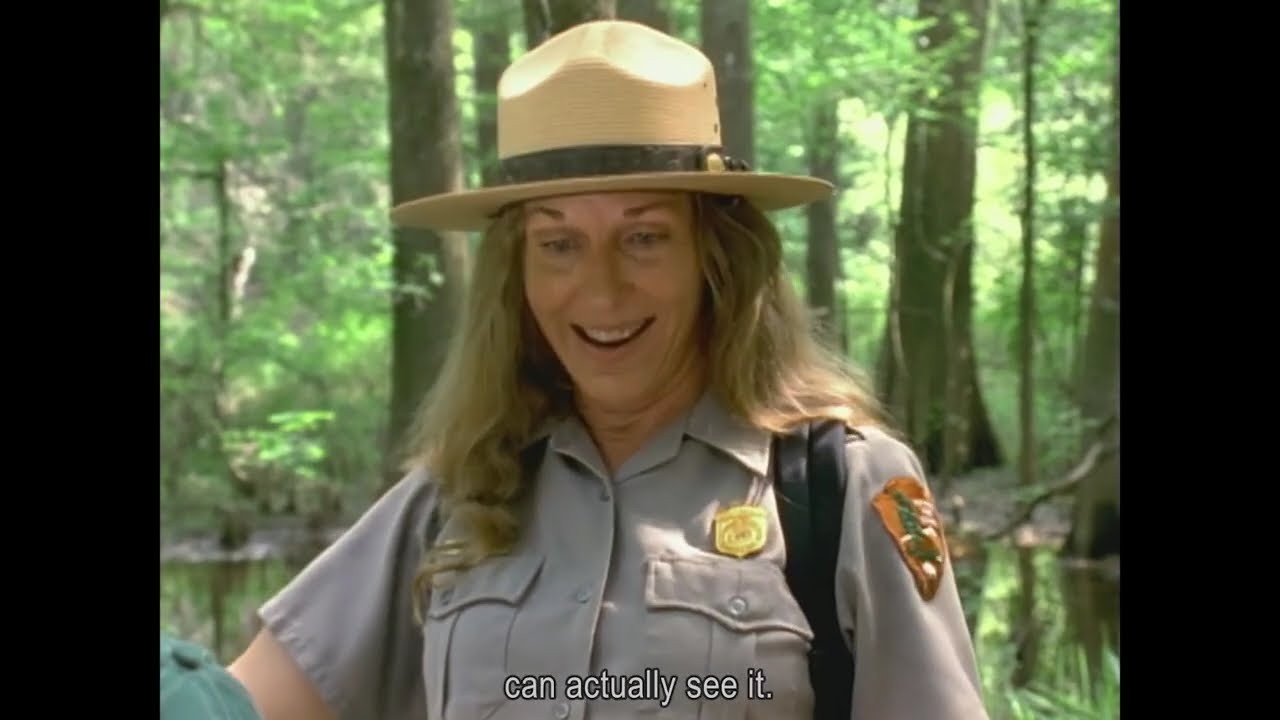
Established back in 1974, Big Thicket National Preserve isn't just a park—it’s a massive biological crossroads where diverse ecosystems collide. From its unique wildlife to its deep-rooted human history, this Southeast Texas gem is a must-see for anyone who loves the Great Outdoors.
If you have 16 minutes to spare, grab some popcorn and check out this incredible short film by the National Park Service. It beautifully captures the sights, sounds, and stories that make the Thicket so legendary. (And don't worry, it’s fully open-captioned!)
Who’s adding a trip to the Thicket to their Texas bucket list this year?
Transcript
This transcript was generated automatically from the video's captions and may contain errors.
You've come to an unusual world. A world of unique diversity. A world that tells a story of how the land shaped people's lives and how people shaped the land. There are no deep gorgees or high peaks here. The beauty is subtle. It's found in the tiny delicate details nurtured in this timeless sanctuary. Finding these subtleties is a journey of exploration and discovery. A journey worth taking to discover the hidden world of Big Thicket. Your journey begins with a story of diversity. If you're from the northeast, you might recognize the beach trees found in many northern forests. If you're from the southwest, the prickly pear cactus might remind you of home. And those from the southeast will recognize the American alligator, native to your semi-ropical swamps.
Here in the big thicket, you'll find them all and much more living side by side. One of the few places in America where this occurs. The environment surrounding you is a microcosm of habitats from swamps, deserts, forests, and plains. What made this place so unique? What brought this diverse collection together in one place? The answer is ice. During the ice ages, glaciers moved across great portions of North America. The climactic changes they produced forced many species of plants and animals to move south. When the glaciers receded, many of the relocated species remained, adapting to their new home and creating one of the most diverse ecosystems in North America. For several thousand years, these impenetrable woods remained uninhabited. Prehistoric Indians, including the Adakappa and Kado, were drawn by the abundance of plants and animals.
They hunted and foraged here, but did not settle in the thicket. In the 16th century, Spanish concistadors came to the area, but they too did not stay. Among the first settlers were the Kashada Indians in the early 19th century, followed by the Alabama tribe. Both moved west to separate themselves from cultural and physical clashes with European settlers. The search for land drew many other settlers to the area in the early 1820s, mostly from the Appalachin region in the east. In the 1850s, the state of Texas granted lands to both the Alabama and Kashada tribes. During the Civil War, the Thicket became a haven for Texans who refused to fight. They moved deep into the Thicket where they couldn't be found. You could live out of the big thicket.
You didn't have to go to the grocery store. You could live. It's It was your medicine, your general store, your pharmacy, whatever. it it was there for you. Well, there were many varieties of trees, including some uh giant cypress trees, some of them 2,000 years old. Cypress is very durable wood and makes an excellent siding. And they also used it to make shingles for the roof. They used the uh fronds, the leaves from palmetas to weave together to make baskets. And there were enough tough grasses that they could use them for cords and vines could be used for ropes. Moss was another thing they used to stuff pillars and mattresses. The local settlers made their chimneys with a mixture of mud and pine needles or grasses and build a a wooden crib structure then packed it with mud to form the chimney.
Besides the resources to build homes, the thicket also provided settlers with other essentials like food and even medicine. They learned that dental pain could be cured by chewing on the bark of the Hercules club tree. It was a natural anesthetic and became known as the toothache tree. Many early settlers had an important ally in the hunt for food, their dogs. These intelligent, well-trained animals were so important to survival, they spawned a nickname for some early settlers. They became known as the dog people. Well, everybody had a had dogs and they weren't just pets. They were very essential. They were used for protection and hunting. And uh they used all types of dogs. They used a a small terrier type dog and sometimes a Kurd dogs to hunt a squirrel and And a squirrel and was a very stable food uh for us back in in those days.
And um the Kurdogs were used mostly for hog hunting and cow hunting. They were just essential. The impact these early settlers had on the land was minimal. They took only what they needed to survive. But the thicket would soon change as others discovered its rich resources. After the Civil War, America's expansion depended heavily on lumber. By the late 1800s, small logging operations took advantage of tens of thousands of acres of virgin timber in the thicket. Narrow gauge railways called trams were built, allowing the loggers deeper access into the woods. Sawmills sprang up and logging became the area's first big industry. There was also a growing dependency on fossil fuels. In 1901, America's first large oil strike was made at Spindletop near Bumont.
Then a tiny town at the southern edge of the Big Thicket. Thousands of jobs were created, greatly increasing the population in the area. Land was taken from the dog people and dozens of small towns began springing up. The Thicket would never be the same again. the early 1900s, even the late 1800s, the advance of the railroads brought business and industry to this area. We began to exploit the resources. First, it was timber. Then, in the early 1900s, the oil and gas exploration began. One does not have to be an expert in either of those industries to see those impacts still on the landscape today. With more homes and buildings in the area, wildfires were not allowed to burn, preventing natural processes that cleared the forest floor. This made the thicket even denser, which affected the habitats of many plants and animals.
As the years passed, some began to recognize the damage being done to this unique environment. People like Lance Roger, a self-taught botonist, Ari Jackson, an early conservationist, and Senator Ralph Yarborough and Representative Charles Wilson, political supporters of the Thicket, along with many concerned people, stepped forward and said, "Enough. Changes had to be made before the Thicket was gone forever." In 1974, the Thicket was designated the country's first national preserve. The National Park Service has impacted the Big Thicket by providing a means by which the community as well as visitors from other places can actually see it. What's that up there? Oh, that stuff hanging down. That's Spanish moss. It looks like an old man's beard, doesn't it?
Yeah. Looks like there's a dragonfly here. Oh, you know what we call dragon flies? What? Mosquito hawks. They can use boardwalks and trails. We've tried to incorporate some of the old logging tram roads because they were already disturbed areas um to get people out to give them an opportunity to see the big thicket. The National Park Service has reintroduced fire to the preserve. Allowing fire its role permits the plants that are fire dependent to exist. But without that, the lower slope plants would invade ups slope in the absence of fire and shade out those species. So if you want to have the dynamic ecosystem, an ecosystem that is functioning properly and moving through time, then fire has to have that role. These prescribed fires monitored by trained personnel are helping to restore the thicket to its natural appearance.
Timber today in the park services land uh is much like I remember it as a kid. It just grows like it's naturally like it's supposed to. You know, if a tree dies, it just falls down. Bug gets in it, it falls down. I think it's been a very positive impact on East Texas and the Big Thicket. All visitors to the Big Thicket should visit at least one trail so that they can see the different plant communities that live side by side. It's very easy when you're walking a trail in the big thicket to simply watch where you're walking and to avoid falling, to maybe occasionally glance around at the trees. Uh to really see the big thicket, you have to stop walking. You have to watch what's going on around you. Give the animals a chance to come back out.
I would like for all visitors to the Big Thicket to come away with the knowledge that diversity is important and vital to a healthy system, whether that is a natural system or a cultural system. at the very least, I guess, a sense of um seeing peaceful coexistence and perhaps applying that to our own lives. Today, the preserve is a small remnant of the original Thicket, protecting many key features that make this place special. The United Nations recognized this in 1981 when they named the area an international biosphere reserve. In 2001, bird lovers recognized it when the American Bird Conservancy designated it a globally important bird area. What's attractive about the Big Thicket is the fact that it's it's peaceful, it's quiet, and it's remote, and it appears to be little changed.
It's a it's a constancy in a changing world. I would like for every visitor to the big thicket to find their sense of wonder, to become a child, and to use their senses of investigation, to become a scientist, and to use all of their senses. Well, when I go back there, it's the aroma. of the big thick, the smell of the bagels, the honeysuckles, the floral type plants in there. That's that's the part that always sets it off from anything else. The sheer richness of it, uh, the sheer volume of plants and animals in there is it it is actually it's like no other place on earth. The Big Thicket, it's my home. Uh, regardless of where I ever live, it it will always be the place that birthed me.


No comments yet