How do you describe a Texas wind that carries away your topsoil and leaves a film of gray powder on the dinner table?
On May 3, 1937, a legendary newsreel crew arrived in Dalhart, Texas. Photographer Carl Pryer was behind the lens for The March of Time, capturing the grinding daily reality of the Dust Bowl.
The outtakes from that shoot reveal a quiet, eerie look at Texas survival. In one sequence, a young boy sits at the family kitchen table, idly tracing letters into the thick layer of silt that had settled right next to the dinner plates. Beside him, his father turns the pages of the family Bible, looking for answers or maybe just a distraction from the howling wind outside.
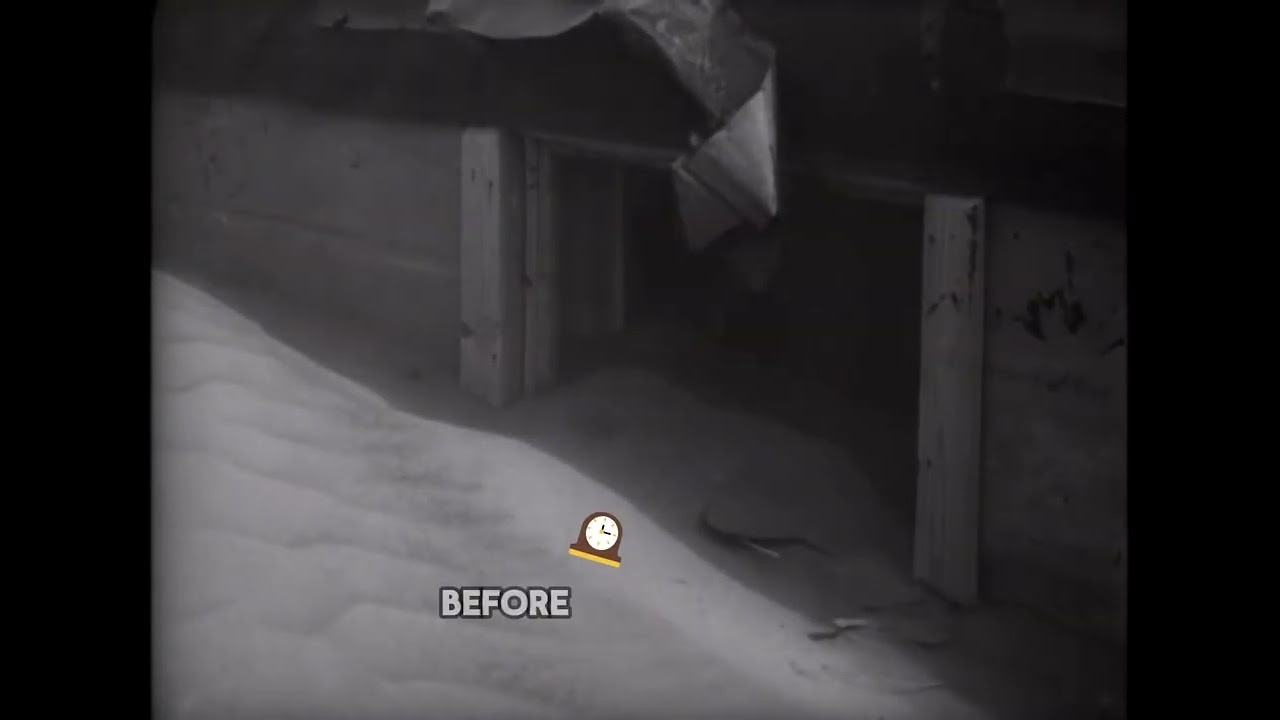
Out in the yard, things were just as bleak. Pryer filmed chickens scurrying frantically through coop nests choked with fine dirt. A barn cat sleeps on cracked, parched earth that looks more like concrete than farmland.
The March of Time was famous for occasionally staging scenes to up the cinematic drama. But the dust? You couldn’t fake that. Dalhart was near the absolute epicenter of the Dust Bowl, surrounded by abandoned homesteads and dead crops.
A 1977 fire destroyed a massive chunk of these historic outtakes, making the surviving reels—stored under reference MT-MTT-474V—an incredibly rare window into Panhandle history.
Did your ancestors live through the Black Blizzards of the 1930s in the Panhandle? What stories did they pass down about keeping the dust out of the house? Let’s talk about it in the comments.
Transcript
This transcript was generated automatically from the video's captions and may contain errors.
Look at this kitchen table. It's May 3rd, 1937 in Dalhart, Texas. A camera operator named Carl Pryer is rolling film for a famous newsreel called The March of Time. He catches this tiny, heartbreaking detail. A young boy sitting inside his family home tracing his finger through a thick layer of gray powder. It isn't spilled flour. It's the topsoil of Dallam County carried inside by the wind and settled right next to the dinner plates. Beside him, his father is turning the pages of the family Bible. There's no anger, no panic. Just the heavy, exhausted silence of a man who has spent years watching the sky destroy his livelihood outside. The scene is just as surreal. Chickens are scurrying through coops where the nesting boxes are filled with fine dirt instead of straw.
A barn cat is curled up asleep on dirt. So baked and cracked it looks like fractured concrete. This footage almost didn't make it to us. A massive archive fire in 1977 burned up a huge portion of these outtakes leaving only a few precious reels behind. And while The March of Time was known to occasionally stage scenes for dramatic effect, you couldn't stage the environmental catastrophe happening outside that window. To understand how Texas got to this point on that May morning, you have to look back a decade earlier when the Panhandle was being sold as the ultimate American paradise in the 1920s. A massive farming boom transformed the High Plains. The introduction of gasoline-powered tractors meant that instead of breaking a couple of acres a day with a team of mules, a single farmer could tear up hundreds of acres of native sod between sunrise and sunset.
Millions of acres of deep-rooted buffalo grass grass that had held the dry Panhandle soil in place for thousands of years through severe droughts were completely obliterated. The land was turned over, pulverized, and planted with wheat. For a few years, the rains fell, wheat prices soared, and it looked like the gamble paid off. Then came 1931. The rains stopped. The Great Drought hit just as the Great Depression crashed the American economy. With no moisture and no root systems to anchor the earth, the relentless Panhandle winds did what they always do. They blew. Only this time, there was nothing to hold the continent down. By 1932. The sky started turning black. They called them black blizzards. These weren't regular dust storms. They were massive, rolling walls of topsoil, thousands of feet high and miles wide, moving across the plains like a solid mountain range.
The static electricity generated by the churning dirt was so intense it could short out car engines and knock adults flat to the ground if they tried to shake hands. If you look at the geography of the destruction, Dalhart sat dead center in the worst of it. The boundary lines didn't matter to the wind. The dust choked out parts of Oklahoma, Kansas, Colorado, and New Mexico, but the Texas Panhandle took a brutal, relentless beating. Day after day, families had to adapt to a totally hostile environment. Women hung wet sheets over windows and doors to catch the dust, only to watch them turn into heavy rags of mud within an hour. Before eating, plates and cups were kept upside down on the table until the exact moment the food was served. Even then, you accepted that every meal came with a crunch.
People developed dust pneumonia. Children coughed up black coalie, and the local doctors were completely overwhelmed trying to treat an environmental infection with simple gauze masks. Livestock fared even worse. Cattle choked to death on the ranges, their stomachs literally filled with heavy mud after trying to graze on dust-covered weeds. The most famous storm struck on April 14th, 1935. History remembers it as Black Sunday. The day started out beautiful, clear, and warm. People went to church, took drives, and finally breathed fresh air. Then the temperature plummeted. A wall of pitch-black dirt moving at 60 miles an hour blotted out the sun completely. It plunged the panhandle into total terrifying darkness in the middle of the afternoon.
People couldn't see their own hands in front of their faces. Many genuinely believed the end of the world had arrived. It was Black Sunday that finally forced the federal government to realize this wasn't just a bad spell of weather. It was a national emergency. Experts like Hugh Hammond Bennett began preaching a new gospel of soil conservation. Texans had to relearn how to farm. They started contour plowing, planting rows of trees as windbreaks, and leaving fields fallow to let the native grasses recover. But change took years, which brings us right back to this footage from May of 1937. Two full years after Black Sunday, the crisis was far from over. Hundreds of thousands of people packed up whatever would fit into an old Model T and abandoned the Southern Plains entirely, heading west toward California, but many stayed.
They dug out their fence lines, waited for the relief checks that barely kept them afloat, and prayed for the sky to break. When you see that boy writing in the dirt on his own kitchen table, you're looking at a generation that grew up knowing the earth beneath their feet could rise up and swallow the sun. It's a moment of quiet Texas resilience preserved on a scratched piece of film that nearly burned away. Mhm.




No comments yet