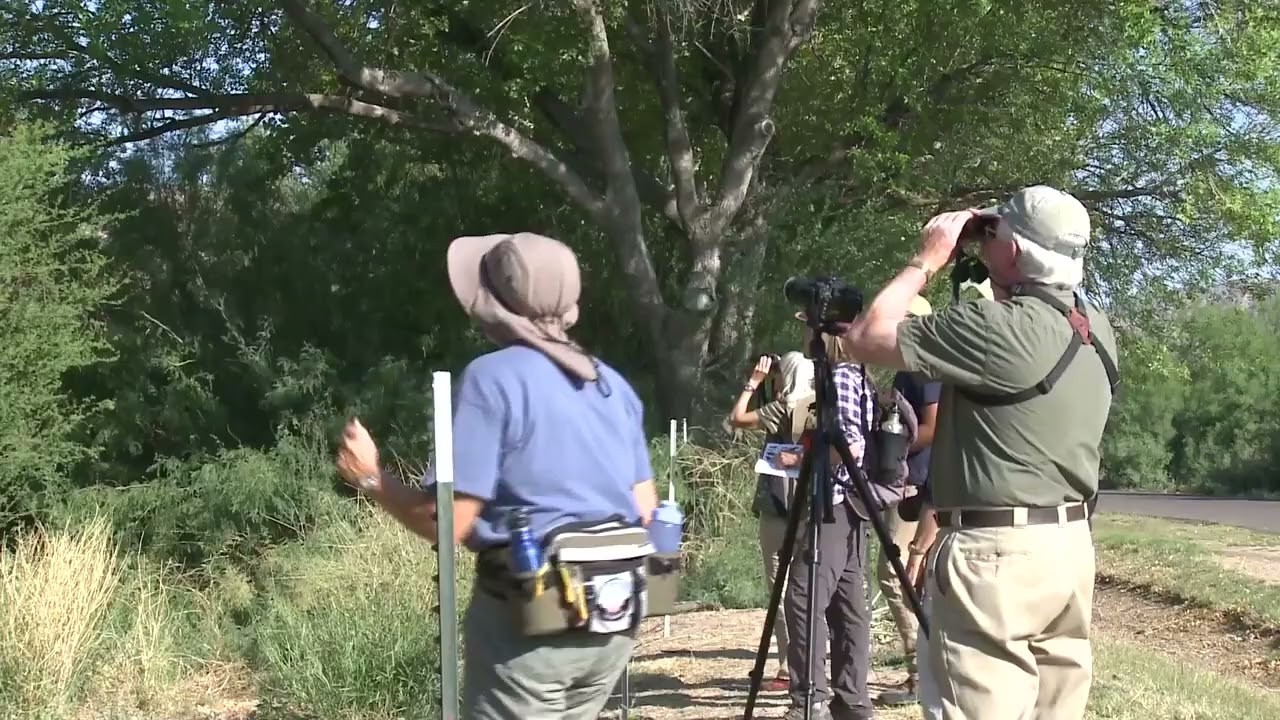
Discover the incredible avian world of Big Bend National Park in this stunning short film. Whether you are a seasoned pro with binoculars or just love the beauty of the high desert, this video showcases why the park is such a legendary sanctuary for hundreds of bird species.
Take a little over ten minutes to escape into the sights and sounds of one of the most diverse ecosystems in the Lone Star State.
Film Details: - Runtime: 11 minutes, 14 seconds - Created by: Reine Wonite / NPS
Transcript
This transcript was generated automatically from the video's captions and may contain errors.
You're watching Inside the Big Bend. It's amazing just how many different birds think Big Bend National Park is a great place to be. In the middle of their long, long migrations each year, between summers up north and winters down south, nearly 190 species of birds land here each spring and fall to rest up, to hydrate, and to feed. From chilly places way up north, about 100 species of birds fly south to here in the fall to take advantage of the Big Bend's mild winters. From the steamy tropics way down south, another 116 species of birds fly north to here in the spring to nest and to raise their families. Additionally, there are some 56 species of birds that apparently think the Big Bend is such a great place. They live here all year round. In the Big Bend country, far from any coastline, there can be classically eastern birds at the western edge of their ranges.
In the same way, there can be classically western birds at the eastern edge of their ranges. Plus, one can find some 82 species of south of the border birds at the northern edge of their ranges. Surprise is a common experience of bird enthusiasts who come here to the Big Bend. Its immediate proximity to Mexico has a pronounced effect on the chance for the appearance of unusual or even extremely rare species for the United States. Spring is the time of the most numerous reports of rare and accidental migrants, as well as the time of greatest diversity of species. Yet, while unusual sightings are thrilling, the park features many locally common species that are often new to visitors. Big Bend is known for its specialty bird. These are species that occur in the United States only in southwest Texas and other areas along our border with Mexico.
In fact, there is one species that comes here to nest that can't be found anywhere else in the United States. Altogether, over 450 species of birds have been documented within the borders of Big Bend National Park. That's nearly 2/3 of all the bird species found in the continental United States. What makes Big Bend National Park such a great place for birds? For one thing, the Big Bend region is on a major migratory route, the central flyway of North America. But why do so many birds land here? Why do some of them go no further south or north? Why do some not bother to migrate away at all? The answer to all these questions lies in the park's diversity of habitats. That is the park has a wide selection of places where various kinds of birds can find shelter, water, food, and places to nest.
Big Bend National Park has a well-deserved reputation among its human visitors as three parks in one. The Chisos Mountains, which lie entirely within the park. the Chihuahuan Desert, the majority of which lies in Mexico, and the Rio Grande, which borders Big Bend National Park on two sides and defines its name. The same three parks within a park idea can be used to categorize the park's varied bird habitats. With a little planning and luck, visitors to the park can see a great variety of birds within a single vacation. To guide visitors to the most rewarding opportunities, Big Bend Natural History Association publishes the park's very own bird checklist, which is updated every few years. This checklist is available for purchase at any of the park's visitor centers.
Not only does it cover which species are likely to be present in which seasons, the checklist indicates the most likely habitats where each species can be found and which locations in the park have those habitats. The following places in the park provide good opportunities to observe a variety of birds. Let's go. The Rio Grande Village area on the east side of the park produces the greatest variety of sightings year round. You may wish to start your search for birds with an early morning hike along the Rio Grande Village Nature Trail. The trail crosses a beaver pond by way of a series of bridges and floating platforms. The platforms offer a number of benches to sit on while scanning the shoreline and snags. Further on, the trail passes a warm water springfed pond.
Back in the campground, walk the road through the no generator zone near the nature trail trail head. Walk around the perimeters of the Rio Grande Village campgrounds, both the single family and group areas. Peer into the mesquite thicket at the edges of the flood irrigated grassy areas that were once farm fields, and up into the many shade trees, especially the tall cottonwoods. At the far west end of Rio Grande Village Road is the Daniels Ranch picnic area. It features a shady grove of tall cottonwood trees with lush green lawns underneath. From there, it's only a short walk to the bank of the Rio Grande at the mouth of Hot Springs Canyon. The Rio Grande, although now much diminished by human demands from both countries it borders, irrigates a double ribbon of lush vegetation.
Between Rio Grande Village and Daniel's Ranch is an extra special place, the common blackhawk nesting area. Despite its name, the common blackhawk is a species whose numbers are in decline, primarily due to habitat loss. Marvelously, this grove of tall cottonwoods has been host to a pair of blackhawks for several decades. Their annual nest building and young rearing often takes place within sight of the road. To help increase the Blackhawk's odds for successful breeding and their continued future use of the area, please remain well outside the signed perimeter and limit your time there. Another great place for birds along the Rio Grande is on the west side of the park between the Castolon Historic District and Santa Elena Canyon. Although the riparian habitats here are somewhat similar to those around Rio Grande Village, it's not uncommon to find different species.
Check out the tall trees and surrounding shrubbery at Cottonwood Campground. Walk the edges of the mesquite thicket along the river banks near Santa Elena Canyon. The Chisos Mountains and their foothills attract many species of birds that otherwise would not be in Big Bend National Park. The Chisos Mountains can be thought of as a moist forested sky island surrounded by a dry desert sea whose sheltering canyons serve as wooded bays and estuaries. Up in the Chisos Basin, you'll find many of the park's human accommodations. Great places to find food, rest, and enjoy family activities. But the basin also offers great places for birds to find food, rest, and enjoy family activities. Look in the grasses, shrubs, and trees around the visitor center, lodge, campground, and trail head.
The window trail with its several trail heads from the resort complex and campgrounds offers a smorgasbord of bird species as it leads through a variety of habitats. It takes some time and effort, but here in the High Chisos Mountains is where you'll need to be to see the Colima Warbler, Big Bend's premier specialty bird species. Although the Colima warbler comes here each spring to nest and raise its young, it has never been documented anywhere else in the United States. Most Colima warblers live in Mexico year round. The Chihuahuan Desert is studded with trickling springs and still active windmills from the pre- park ranching era. These create oases of moisture and greenery that are a powerful magnet for birds. While most of the springs require a fair amount of hiking to get to, there are two historic places within a short walk from a paved or well-graded roadway.
A half dozen miles from park headquarters, the Cottonwood Grove at Dugout Wells survives in the middle of open desert, watered by an old yet still functional windmill. In addition to its resident desert birds, Dugout Wells is a secluded stopover spot for migratory birds passing through. Its picnic table, accessible by wheelchair, is a great place to sit while listening for bird songs and calls. Another excellent place to look for birds and other wild creatures in search of moisture and shade in the desert is at the remains of the Sam Nail Ranch. Just a few miles from the Chisos Mountains and its basin window, a well functioning windmill and large shade trees make Sam Nail Ranch a true desert oasis. A wooden bench under huge pecans that were part of the ranch house garden provides a comfortable place to sit while you watch the everchanging pageant of wildlife.
One last thing, park visitors like you are often our best eyes and ears for sightings of rare or unique birds, as well as the earliest and latest sightings of migratory and seasonal birds. So, if you see a bird that's listed as hypothetical, rare, sporadic, out of season, or otherwise different from the park checklist, please stop in at a visitor center as soon as possible and fill out an observation report. Be sure to include a detailed description of the bird, what it was doing, and when, but most importantly, its exact location because we want to try to see it, too. If you can get a clear photograph of your sighting, you may make park history.


No comments yet