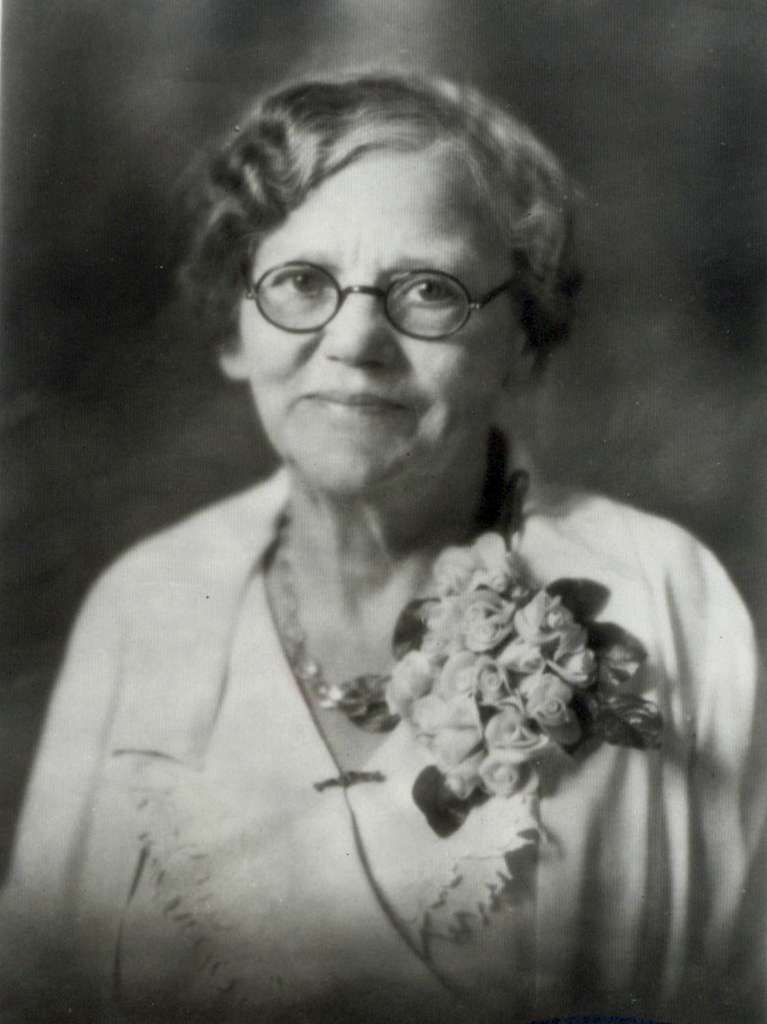
Every popular telling of H-E-B history starts with the same line: Howard E. Butt built a Texas institution out of nothing. He didn't. His mother did — alone, with sixty borrowed dollars, in a rented room above a Kerrville storefront in 1905. That company has stayed in Butt family hands for 121 years since, growing into the grocery chain Texans now half-jokingly call the state's real emergency management agency.
The H-E-B History Books Don't Lead With Florence
Florence Thornton Butt moved to Kerrville in 1905 with her husband, Clarence, and their three sons. The family had already tried San Antonio once, chasing drier air for Clarence's tuberculosis, before landing in the Hill Country. He couldn't work. Someone had to feed the household, and Florence had no retail experience and no capital beyond a $60 loan. She used it to stock a one-room grocery on the ground floor of the family's Main Street home. An early ad in the Kerrville Mountain Sun lists her plainly as "Mrs. F.T. Butt," selling coffee, bread, baking powder, and tea, with delivery handled first by baby carriage and later by the little red wagon her sons saved up for. The Texas State Historical Association credits her directly as founder — a detail the company's own retelling has flattened for most of a century.
I'd argue that flattening is the more interesting part of the story than the store itself. A company built on quietly taking care of people spent decades not doing that for the woman who started it.
Howard Takes the Wheel
Howard Edward Butt, Florence's youngest son, had delivered groceries from that store as a boy. He returned from Navy service in World War I and took over daily management in 1919, while Florence was in her fifties. His first real move mattered more than any expansion: he shifted the business off his mother's credit-and-delivery model and onto cash-and-carry, a novel approach for a small-town grocer in the early 1920s. Four attempts to open second locations across Central Texas failed outright, including one in Junction. The store that finally held was Del Rio, by 1927, followed fast by three purchased stores in the Lower Rio Grande Valley in 1928, financed with a $38,000 loan — close to $800,000 today.
By the 1930s the sign out front carried Howard's initials: H.E. Butt Grocery Company, shortened by customers into the three letters everyone uses now. The Depression should have killed a chain this young. Instead, low prices and fast vertical integration — Howard bought the Harlingen Canning Company and opened a Corpus Christi bakery in 1936 — kept it growing while the company handed out employee picnics and group life insurance most retailers of the era weren't offering anyone.
Corpus Christi, San Antonio, and the Arsenal
Headquarters chased the growth: the Rio Grande Valley in the early 1930s, then Corpus Christi in 1940 to manage a stretching footprint. The first store to officially carry the H-E-B name opened in San Antonio in 1942, air-conditioned and stocked with frozen foods — modern touches for a wartime grocery. Fifty stores by 1944. A retail support and distribution center in San Antonio by 1964. And in 1985, the company bought ten acres of the old San Antonio Arsenal , an 1859 U.S. Army munitions depot that had once supplied frontier forts like Fort Stockton and Fort Davis, and moved corporate headquarters into the renovated buildings. It's still there.
Charles, Howard III, and the Long Modern Build
Charles Butt, Howard's son and a Wharton graduate, took over as president in 1971 with the company doing roughly $221 million a year. Under his chairmanship, H-E-B rolled out generic brands, opened its own milk plant in 1976, launched the upscale Central Market format in Austin in 1994, and crossed into Mexico with a Monterrey store in 1997 — the same year it became the first retailer to win the Texas Governor's Award for Environmental Excellence . Craig Boyan, who joined as a consultant in 2005, ran the company as president from 2010 until stepping down in January 2026, growing annual sales from roughly $10 billion to $50 billion along the way; Roxanne Orsak, who started as a store management trainee in 1988, took his place as H-E-B's first woman president. Charles remains chairman. The CEO title has belonged since 2021 to his nephew, Howard Butt III — Florence's great-grandson.
Why Texans Call It "The FEMA of Texas"
The nickname isn't really a joke about government incompetence. It's a joke about H-E-B's competence. The company keeps three mobile kitchens, a disaster relief unit, and two water tankers on permanent standby — resources most retailers simply don't own. During Hurricane Harvey in 2017, more than 144 H-E-B stores were affected by the storm itself, and the company still pushed over $6 million into shelters, food banks, and relief units, while Charles Butt personally donated $5 million to J.J. Watt's flood relief fund. The mobile kitchen fleet traces back to a single longtime employee, Eddie Garcia, who'd once cooked on a flatbed field kitchen before Vietnam and remembered the design decades later when the company needed a fast way to feed people. During the catastrophic Central Texas floods of July 2025, H-E-B deployed relief sites to Leander, Burnet, Liberty Hill, and Kerrville — the same county where Florence Butt opened her store 120 years earlier — and Texans on social media started calling the chain "Texas' FEMA" without much irony at all.
Today the company runs more than 455 stores across Texas and Mexico with upward of 175,000 employees, still roughly 90 percent owned by the Butt family. Every one of those stores traces back to a $60 loan and a woman whose name mostly disappeared from the story she started.
What's the H-E-B story you grew up hearing — was it always about Howard, or did somebody in your family know it started with Florence?
No comments yet