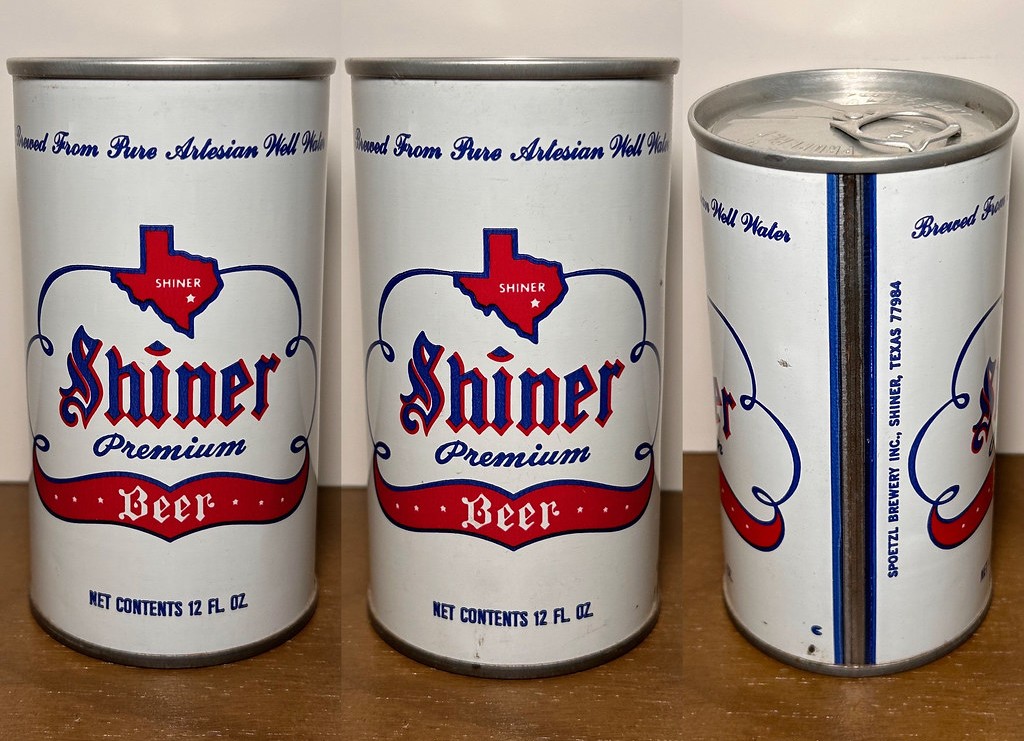
If you've ever shown up to a grocery store at 9:45 on a Sunday morning and been told you'd have to wait, you've felt the weight of about 180 years of Texas alcohol policy. The short answer: beer and wine at grocery and convenience stores start at 10 a.m. on Sundays. Liquor stores don't open at all. But the longer answer — how Texas got here — is genuinely one of the stranger political stories in state history.
The Quick Reference: Texas Sunday Alcohol Hours in 2025
Beer and wine at grocery stores, convenience stores, and off-premise retailers: 10 a.m. to midnight on Sundays. That's it for the packaged goods aisle. Liquor — meaning spirits over 4% alcohol by weight — cannot be sold in package stores on Sundays at all. That's not a local rule or a TABC regulation; it's baked into the Texas Alcoholic Beverage Code, Chapter 105.
Bars and restaurants operate under different rules. They can serve on Sundays starting at 10 a.m., and establishments with a late-hours permit can keep serving until 2 a.m. any night of the week. Hotel bars can serve registered guests around the clock. Sports venues, festivals, and concerts with live events can start alcohol service at 10 a.m. as well.
One thing worth knowing before you plan your Sunday: these hours apply where alcohol sales are legal in the first place. Texas still has dry and partially dry areas, and local rules can tighten what state law permits. Always worth a quick check if you're somewhere unfamiliar.
🍺 How Texas Got to 10 a.m.: House Bill 1518
For most of modern Texas history, Sunday beer and wine sales at grocery and convenience stores didn't start until noon. That changed September 1, 2021, when House Bill 1518, passed by the 87th Texas Legislature, moved the window up two hours to 10 a.m. The bill was a targeted fix, applying only to businesses with beer and wine permits — your H-E-B, your corner store, your gas station. Liquor stores stayed shut on Sundays, exactly as before.
The same legislative session made another lasting change: House Bill 1024 permanently legalized alcohol to-go from bars and restaurants. Governor Abbott had initially allowed to-go cocktails as a COVID-19 emergency measure in 2020. The 87th Legislature made it permanent, meaning a sealed cocktail with your takeout order is now just part of how Texas operates.
The Blue Laws: What Texans Used to Not Be Able to Buy on Sunday
Before we get to Prohibition, there's a stranger chapter. In 1961, the Texas Legislature passed what became the state's signature blue law — a restriction on selling 42 specific categories of goods on Sundays. The list was famously absurd. You could sell peanut butter but not a pot to cook in. Beer was legal but a package of screws was not. Linoleum? Banned. Wallpaper? Fine. China plates were off-limits; paper plates were fair game.
Texas Monthly documented the real engine behind those laws in a piece that's still worth reading: it wasn't the churches pushing hardest, it was the Texas Retailers Association, which spent a significant chunk of its lobbying budget every session keeping the blue law alive. Retailers who didn't want to staff a Sunday shift found it convenient to have a law that required the competition to close too.
Most of those restrictions were repealed in 1985. What survived were the two that are still with us today: the Sunday liquor store closure (Texas Alcoholic Beverage Code, Chapter 105) and the rule that car dealerships must close on either Saturday or Sunday — but not both. The latter is in Texas Transportation Code Section 728.002 and has no religious intent left in it; it's pure labor protection wrapped in regulatory inertia.
The term "blue law" itself has murky origins. The most plausible theory, according to historians, is that the name derives from the Puritan use of "blue" as shorthand for moralistic strictness — not from any paper color, as often repeated.
The Republic of Texas Was Already Fighting About Booze
This fight is older than statehood. Seven years after the Battle of San Jacinto, the Congress of the Republic of Texas passed what the Texas State Historical Association's Handbook of Texas identifies as possibly the first local-option alcohol measure in North America — this in 1843. The logic was the same then as it is in a dry precinct vote today: let communities decide for themselves.
Two years later, in 1845, the newly annexed State of Texas banned saloons outright. The law was never enforced and was repealed by 1856, which is about as Texas an outcome as you can get. The 1863 Sunday prohibition law — one of the state's earlier blue laws — banned horse racing, bowling, gambling, and selling alcohol on the Sabbath, with a $50 fine for violations. Fifty dollars in 1863 was not a trivial sum.
The Texas Constitution of 1876 codified local option elections, giving counties, cities, and even justice-of-the-peace precincts the power to vote themselves dry. By 1908, according to records cited by the University of the Incarnate Word's Journal of San Antonio history, Texas contained 152 dry counties, 66 partially dry, and just 25 completely wet — with Bexar County among the holdouts.
Prohibition Came to Texas a Year Early
The Texas Legislature ratified the 18th Amendment in February 1918, and in May 1919 Texas voters approved a state prohibition amendment — a full year before the federal Volstead Act took effect in January 1920. Texas's own enabling statute, often called the Dean Act, was actually stricter than the federal version in one key way: it classified violations as felonies rather than misdemeanors.
It did not go as planned. Moonshine operations spread through East Texas and the Hill Country. Smuggling rings ran product along the Gulf Coast and up from Mexico, where alcohol stayed legal throughout. Speakeasies opened in Houston, Dallas, and — of all places — Galveston, which developed a reputation during the era for being a particularly enthusiastic ignorer of Prohibition. The Maceo family's syndicate ran Galveston's illegal gambling and liquor trade through the 1920s and into the 1950s, an operation so brazen it became an open secret.
When the 21st Amendment repealed national Prohibition in December 1933, it did not automatically un-dry Texas — because the state had its own prohibition amendment independent of the federal one. Texans voted that same August to allow 3.2% beer (317,340 for, 186,315 against), and those sales resumed within months. It took until August 1935 for voters to repeal the state dry law outright, 297,597 to 250,946. The Legislature convened a special session in September 1935 to draft a regulatory framework, and licensed alcohol sales finally resumed in early 1936.
The TABC and the Modern Regulatory Framework
The Texas Liquor Control Board — renamed the Texas Alcoholic Beverage Commission in later decades — was created out of that 1935 special session to manage what came after Prohibition. The three-tier system it enforces (manufacturer, wholesaler, retailer operating as separate entities) was specifically designed to prevent the kind of tied-house arrangements that had been blamed, partly, for the conditions that made Prohibition politically possible in the first place.
A notable footnote: as late as 1970, Texas still banned the sale of alcohol by the drink in open saloons — meaning bars as we know them today were technically illegal. That last vestige of statewide prohibition was finally voted out in 1970, on a local-option basis. Texas craft beer got another significant modernization in 2019, when the state became the final in the country to legalize beer-to-go sales from manufacturing breweries — a change that took over a decade of lobbying.
Dry Counties Still Exist — Just Barely
In 1995, Texas had 53 fully dry counties. By 2003, that was down to 51. As of March 2025, according to the TABC's own published data, only three Texas counties remain completely dry: Borden, Kent, and Roberts. All three are sparsely populated Panhandle and South Plains counties. Throckmorton County, which had been on the list, voted to allow some alcohol sales more recently, and Hemphill County went wet in 2022 — specifically, voters in the county seat of Canadian cited the tax revenue potential.
Partially dry territory is much more widespread. Harris, Travis, and Dallas counties are all only partially wet — meaning some precincts within those counties have their own restrictions that predate or supplement state law. Houston's Heights neighborhood didn't allow full alcohol sales until a 2017 local-option vote passed 60-40, undoing a restriction that dated to 1912.
Full Sunday Hours at a Glance
Beer and wine (grocery/convenience stores): 10 a.m.–midnight Sunday. Beer and wine, Monday–Friday: 7 a.m.–midnight. Saturday: 7 a.m.–1 a.m. Liquor stores: closed all day Sunday, and also closed on Thanksgiving, Christmas, and New Year's Day. If Christmas or New Year's falls on Sunday, the closure carries to Monday. Bars and restaurants: can serve from 10 a.m. Sunday; up to 2 a.m. with a late-hours permit in jurisdictions that allow it. Wineries: 10 a.m.–midnight on Sundays.
What changed in 2021 is the 10 a.m. start for off-premise beer and wine. Before House Bill 1518, it was noon. Two hours doesn't sound like much until you've got a noon kickoff and a half-stocked cooler.
Texas has been arguing about when and where you can buy a drink since before it was a state — and given that liquor stores are still closed every Sunday by law, that argument clearly isn't finished. What's the weirdest alcohol rule you've run into in Texas? Drop it in the comments.

1 Comment